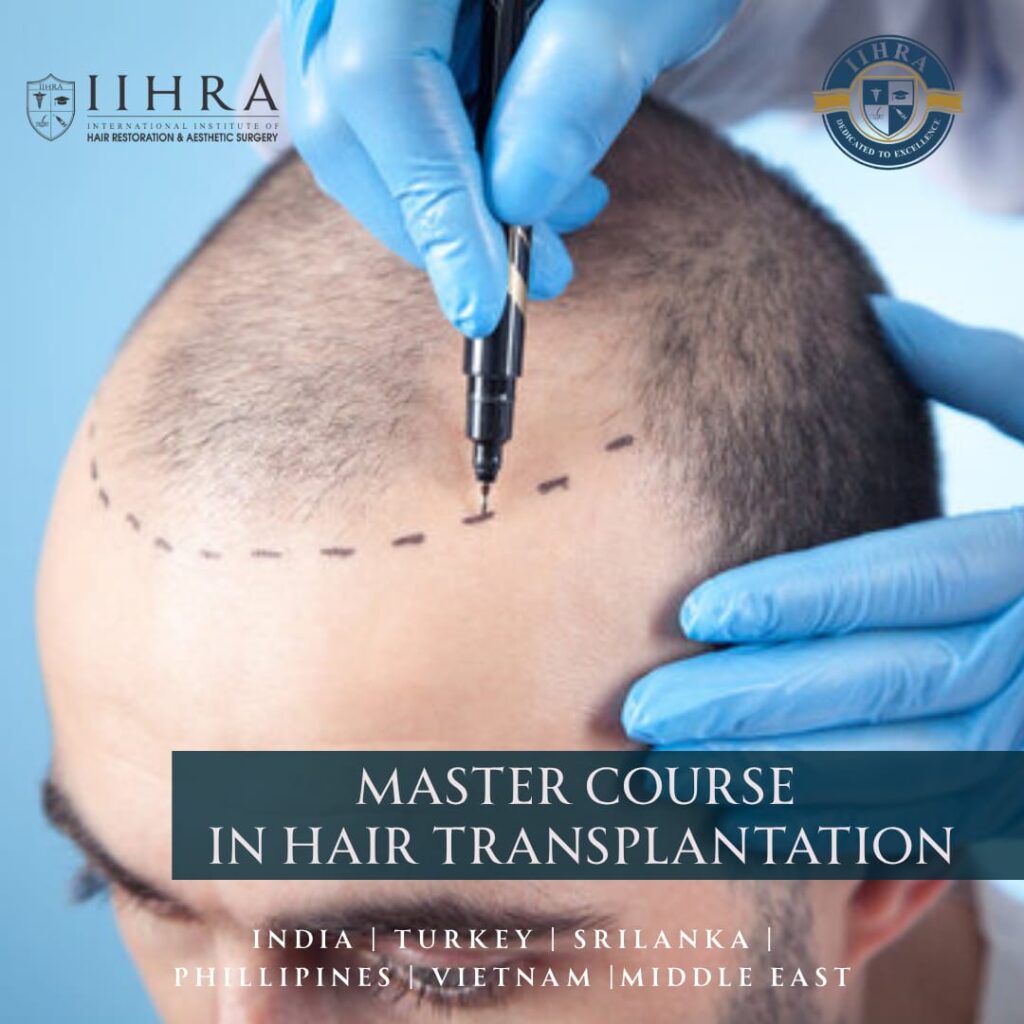
Master Course in Hair Transplantation (MCHT)
Comprehensive 5-Day Advanced Surgical Fellowship Curriculum
- University Affiliation: Northwest International University, UK Affiliated Program
- Global Endorsement: Accredited by the Middle East Hair Research Society (MEHR)
- Continuing Education: CPD Approved (United Kingdom) for Professional Development
- Course Duration: 5 Days Intensive Surgical Fellowship
- Instruction Format: Interactive Core Lectures, Live Patient/Operating Room Demonstrations, & Supervised Hands-on Training
- Credentialing: Certified by Northwest International University, UK
Course Overview & Educational Objectives
An elite, hands-on surgical residency designed to transition qualified medical professionals into autonomous hair restoration surgeons. The curriculum covers advanced FUE and DHI extraction, artistic recipient site architecture, live-patient clinical execution, and strict complication management workflows.
Focus: Hairline Architecture, Nerve Blocks, Tumescent Dynamics, and FUE Mechanics
Module 1: Pre-Surgical Framework & Hair Transplant Theory
- Patient Selection & Ethics: Psychological screening for Body Dysmorphic Disorder (BDD), managing patient expectations, and navigating medical contraindications.
- Aesthetic Hairline Design: Principles of facial symmetry, golden ratios, creating age-appropriate hairlines, establishing the macro- and micro-environments, and calculating graft requirements (density planning).
- Donor Management: Safely defining the safe donor zone (SDZ), calculating donor density using a trichometer, and preventing donor depletion or over-harvesting.
Module 2: Surgical Pharmacology: Anesthesia & Tumescence
- Local Anesthesia (LA): Pharmacology of Lidocaine and Bupivacaine, calculating maximum safe dosages (mg/kg), managing toxicity (LAST – Local Anesthetic Systemic Toxicity), and using epinephrine for hemostasis.
- Advanced Block Techniques: Executing supraorbital, supratrochlear, and occipital nerve blocks to achieve total regional anesthesia with minimal patient discomfort.
- Tumescence Fluid Dynamics: Formulation of custom tumescent solutions. The physics of hydrostatic pressure in creating the perfect surgical plane, minimizing bleeding, and separating the dermis from underlying large blood vessels.
Module 3: FUE & Bio-Enhanced Hair Transplantation
- FUE Mechanics: Introduction to motorized and manual FUE scoring devices. Understanding punch geometry (sharp, blunt, serrated, hybrid) and choosing diameters (0.7mm to 0.9mm).
- Bio-Hair Transplantation: Integrating biological scaffolds and regenerative storage solutions (e.g., HypoThermosol, ATP additives, or holding grafts in autologous PRP/GFC) to dramatically increase graft survival rates ex-vivo.
Module 4: Day 1 Hands-On Practical Training
- Live interactive mapping, landmark tracing, and density planning for age-appropriate hairline restorations on diverse models.
- Step-by-step design, formulation, and execution mapping for regional nerve blocks and tumescent fluid delivery.
- Hands-on calibration of motorized FUE scoring devices, punch geometry selection, and depth control parameters.
Focus: Facial Hair Transplants, DHI Implanters, and Tactile Ex-Vivo Training Residency
Module 5: Special Area Restoration: Beard Transplantation
- Facial Hair Anatomy: Differences between scalp and facial hair graft characteristics (angle of exit, single-hair dominance, change in direction).
- Design & Execution: Framing the cheek line, jawline, and goatee while maintaining an acute exit angle (10° to 15°) to ensure natural layment.
Module 6: Direct Hair Implantation (DHI) / Implanter Pen Technique
- DHI Methodology: Comparative analysis of conventional slitting vs. the “No-Root-Touch” DHI implanter pen technique (Choi, Lion, or equivalent).
- Surgical Mechanics: Simultaneous site creation and graft placement, depth control mechanics, and managing the positioning of the graft to prevent popping or burying.
Module 7: Pre-Clinical Simulation Laboratory (Hands-on Lab)
- Ex-Vivo Tissue Training: Tactile simulation utilizing pork skin models to master the mechanical feel of tissue resistance.
- Extraction Drills: Perfecting alignment, centration, depth control, and rotational speed parameters using FUE punches.
- Implantation Mechanics: Mastering forceps handling, avoiding graft trauma (holding the dull tissue/bony structure of the graft rather than the bulb), and adjusting placement angles.
Module 8: Day 2 Hands-On Clinical & Surgical Residency
- Supervised ex-vivo laboratory tissue drills optimizing centration and depth metrics during manual and motorized punch extractions.
- Hands-on tactile training with DHI/Implanter pens on specialized models to perfect site creation and acute angle alignment.
- Practical simulation of forceps mechanics, graft manipulation safety boundaries, and implantation placement depth adjustments.
Focus: Fundamental Surgical Endurance and Real-Tissue Coordination
Module 9: Pre-Operative Preparation
- Clinical Preparation: Patient marking, final donor-recipient mapping, photographic documentation, and establishing sterile fields in the operating theater.
Module 10: Supervised Donor Harvesting (Extraction)
- Live Extraction Execution: Live execution of FUE punches on real tissue. Mastering the depth sensation to minimize follicular transection rates.
- Graft Triage Workflow: Graft extraction using fine forceps, followed by immediate triage, counting, and sorting by a surgical technician team under magnification.
Module 11: Recipient Site Creation (Slitting) & Implantation
- Site Creation Architecture: Hands-on creation of recipient slits using customized sapphire blades or needle gauges. Controlling depth, density, and natural directional angulation (20° to 45°).
- Atraumatic Implantation: Live implantation of harvested grafts into created sites, ensuring zero graft handling trauma.
Module 12: Day 3 Hands-On Clinical & Surgical Residency
- Supervised pre-operative marking, patient preparation, and sterile field setup on a live surgical case.
- Directly supervised FUE donor harvesting, mastering tactile depth sensation on live patient tissue.
- Supervised execution of recipient site slitting and manual graft implantation techniques.
Focus: Refining Surgical Speed, Hand-Eye Coordination, and Multi-Density Tissue Management
Module 13: High-Density & Giga-Session Strategies
- Surgical Orchestration: Clinical workflow orchestration during larger surgical sessions, balancing extraction speed with graft hydration and viability constraints.
Module 14: Live Surgical Execution (Case 2)
- Autonomous Clinical Foundations: Independent execution of regional nerve blocks and tumescence infiltration.
- Advanced Donor Harvesting: Advanced extraction practice with a focus on lowering transection rates under different skin laxity conditions.
- Advanced Recipient Mapping: Customized recipient site architecture for advanced stages of baldness (Norwood Scale IV-VI) or focal crown restoration.
- Density Maximization: Refining placement techniques using premium micro-forceps or implanter pens to maximize density without causing surrounding grafts to pop out.
Module 15: Day 4 Hands-On Clinical & Surgical Residency
- Independent administration of local nerve blocks and advanced tumescent infiltration on live case patients.
- Supervised high-density extraction and recipient site creation tailored to Norwood Scale IV-VI crown architectures.
- Advanced deployment of implanter pens or micro-forceps to optimize graft density and prevent graft popping.
Focus: Long-Term Safety Workflows, Corrective Procedures, and Clinical Preservation
Module 16: Comprehensive Complications Management
- Intra-Operative Complications: Managing vasovagal episodes, epinephrine sensitivity, pain thresholds, and intra-operative tachycardia/anxiety.
- Early Post-Operative Complications: Identifying and managing flap or donor necrosis, acute infections, severe edema (swelling control), and donor site folliculitis.
- Late-Stage Complications: Correcting poorly angled grafts, resolving cobblestoning (irregular skin texture), treating donor over-harvesting with micro-pigmentation or grafting, and managing shock alopecia.
Module 17: Post-Surgical Nursing Care & Trichological Maintenance
- The First 24-48 Hours: Sterile dressing removal protocols, monitoring graft adherence, and utilizing graft hydration sprays.
- First Head Wash Protocol: Step-by-step practical demonstration of the gentle post-transplant wash using specialized foams, removing scabs/crusts without dislodging grafts on Day 5.
- Long-Term Medical Preservation: Formulating long-term medical therapy regimes (Finasteride, Topical/Oral Minoxidil, DHT blockers) to preserve non-transplanted native hair and ensure lasting results.
- Interactive case study mapping for emergency intra-operative and post-operative complication management drills.
- Step-by-step practical demonstration and execution of the first clinical post-transplant head wash protocol.
- Grand Q&A review, clinic implementation panels, and Distribution of Master Course Certificates from Northwest International University & UK CPD.