
Master Course in Gynecomastia Surgery: Advanced Surgical Glandular Excision & Liposuction
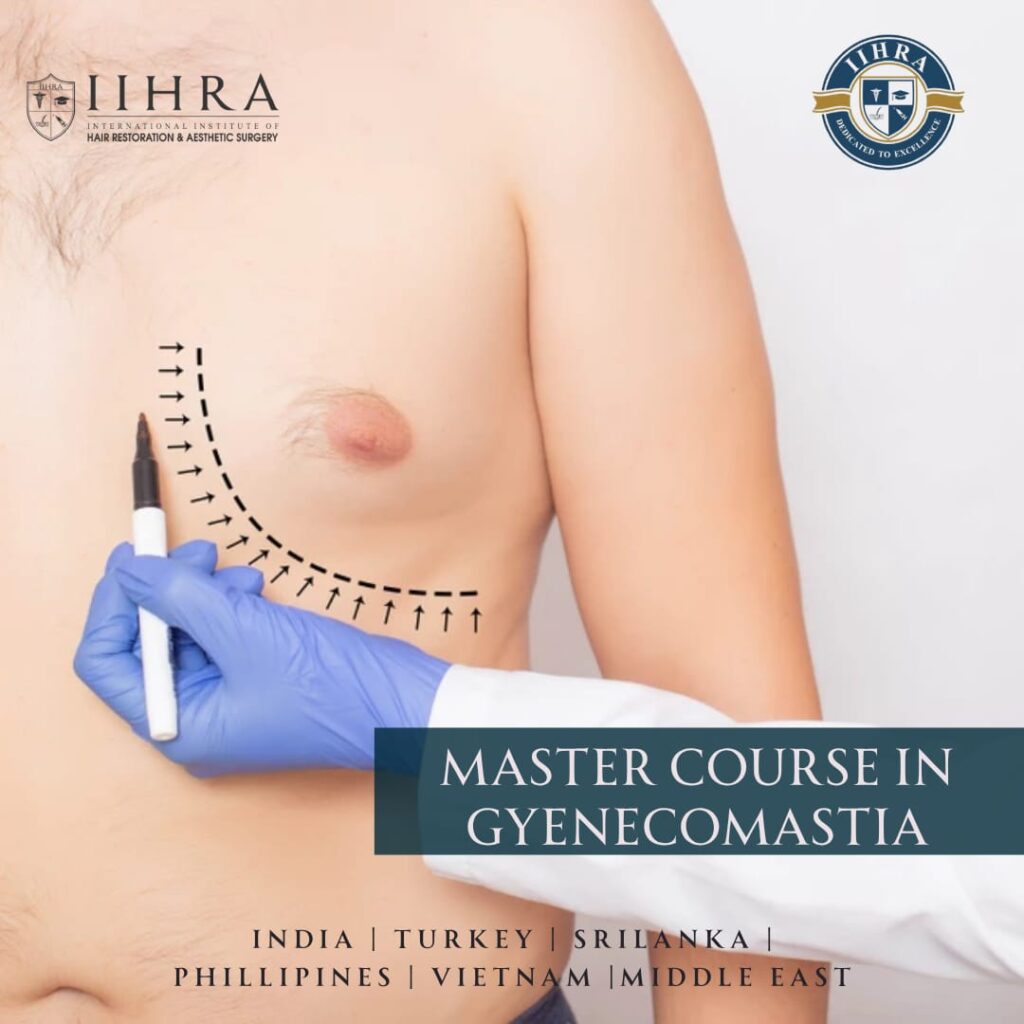
Comprehensive 2-Day Advanced Surgical & Hands-On Fellowship Program
- University Affiliation: Northwest International University (NIU) Affiliated Program
- Global Accreditation: Continuing Professional Development (CPD) Certified – UK CPD Approved
- Course Duration: 2 Days (Advanced Surgical Immersion)
- Instruction Format: Interactive Core Lectures, High-Definition Live Operating Room Demonstrations, & Supervised Hands-on Surgical Residency
- Minimum Eligibility: Strictly open to licensed Medical Practitioners specializing in Plastic Surgery, General Surgery, Surgical Oncology, or equivalent advanced surgical disciplines.
This postgraduate-level surgical masterclass delivers an exhaustive, high-yield foundation in male breast reduction, chest contouring, and advanced tissue remodeling techniques. Led by an esteemed international faculty, the program transitions qualified surgeons from basic adipose debulking into advanced, deep-tissue surgical planes. This includes targeted gland preservation, mechanical high-definition liposuction, skin redraping, and complication prevention algorithms.
Focus: Layered Pectoral Anatomy, Simon’s Classification, High-Definition Tumescent Formulation, and Gland Excision Geometry
Module 1: Surgical Anatomy & Pectoral Tissue Layering
- Surgical Layering: High-resolution analysis of the male chest wall (Skin, Superficial Adipose Layer, Fibroglandular Breast Tissue, Deep Pectoral Fascia, and Pectoralis Major Muscle).
- Vascular Mapping & Hemostasis: Detailed charting of the Lateral Thoracic Artery, Internal Mammary perforators, and Intercostal vascular networks to systematically prevent intraoperative hemorrhage or postoperative hematoma.
- Nerve Architecture: Tracking safe vectors and depth parameters around the Anterior and Lateral Cutaneous branches of the Intercostal Nerves to minimize chronic postoperative paresthesia or loss of nipple-areola complex (NAC) sensation.
Module 2: Gynecomastia Evaluation & Pre-Surgical Mapping
- Patient Selection & Classifications: Masterclass in Simon’s Classification System (Grade I to Grade III). Differentiating true gynecomastia from pseudogynecomastia and establishing protocols for high-definition male chest sculpting.
- Incision Architecture: Geometric design of the Webster intra-areolar incision, pull-through extraction parameters, and alternative approaches for severe skin redundancy.
- Photographic Standards: High-resolution multi-angle topographic staging (Anterior, $45^\circ$ oblique, and Lateral profiles) and establishing legal medical consent document logs.
Module 3: Surgical Pharmacology, Tumescence, & Liposuction Dynamics
- Surgical Pharmacology: Formulation of advanced high-volume chest tumescent solutions optimized for microvascular hemostasis, mechanical tissue separation, and non-toxic local anesthesia.
- Liposuction Mechanics: Comparative analysis of traditional manual, power-assisted (PAL), and energy-based liposuction. Cross-criss-crossing cannula tracking to systematically eliminate superficial contour irregularities.
Module 4: Glandular Excision & Chest Wall Contour Harmonization
- Webster Pull-Through Technique: Mechanical principles of identifying, isolating, and sharp-dissecting fibroglandular cores from the retro-areolar bed.
- The “Glandular Button” Protocol: Crucial techniques for leaving a customized, conservative $5\text{ mm}$ subcutaneous tissue cushion beneath the NAC to prevent post-surgical nipple cratering or tethering deformities.
- Pectoral Framework Integration: Transitioning the margins between the excised gland bed and surrounding adipose tissues to achieve a flat, athletic chest contour.
Focus: Live Operating Room Case, High-Dose Complication Protocols, and Post-Op Continuity
Module 5: Pre-Operative Preparation & Theater Stabilization
- Clinical Protocol: Live patient standing marking with demographic instruments under international faculty supervision. Mapping the aesthetic boundary vectors, defining areas for liposuction vs. sharp gland excision, and establishing strict sterile fields.
Module 6: Live Surgical Execution – Case 1 (Combination Liposuction & Gland Excision)
- Tumescent Infiltration & Liposuction: Supervised real-tissue deployment of high-definition pectoral tumescence followed by power-assisted or manual liposuction.
- Webster Intra-Areolar Excision: Live surgical execution of the sub-areolar flap dissection, sharp mobilization of the fibroglandular core, protective gland button preservation, and tissue retrieval under direct faculty guidance.
- Contour Refinement & Closure: Supervised hands-on progressive margin leveling, multi-layer tension-free closure, chest-wall drain deployment, and precision micro-suturing.
Module 7: Comprehensive Complications Management & Emergency Protocols
- Acute Surgical Crisis: Algorithmic recognition and immediate intervention for expanding post-operative pectoral hematomas, acute skin flap ischemia, and seroma pockets.
- Contour Deformity Reversal: Surgical corrective strategies for postoperative saucer deformities (nipple cratering), asymmetry, residual gland mass, and hypertrophic areolar scabs.
- Ischemic Flap Rescue: Medical and mechanical protocols to preserve vascular flow to a compromised nipple-areola complex.
Module 8: Post-Surgical Continuity & Long-Term Compression Therapy
- The First 24–48 Hours: Sterile dressing removal protocols, monitoring capillary refill times of the NAC, and managing compression vest pressures.
- Long-Term Silhouette Maintenance: Step-by-step guidance on post-surgical chest binders, activity restrictions, and scar care parameters to ensure long-term structural results.
- Grand Final Review: Interactive clinical panel with the international faculty, practice integration frameworks, and the distribution of Master Course Certifications from Northwest International University & UK CPD.